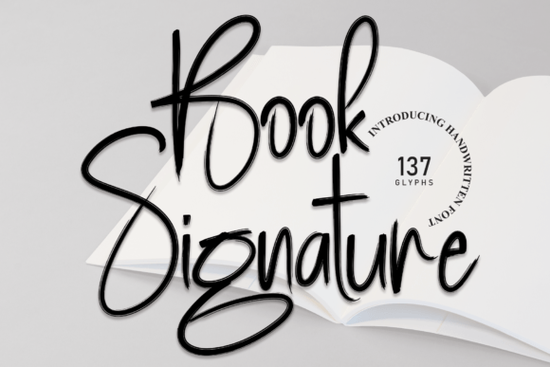
If you're looking for a handwritten font that feels personal, graceful, and quietly confident without being overly ornate or hard to read Book Signature Font fits naturally into many design workflows. It’s not flashy, but it carries presence: soft curves, consistent spacing, and characters that flow like ink on quality paper. Designers and small business owners often reach for it when they need something elegant but approachable think book covers, wedding stationery, boutique packaging, or hand-lettered quotes for social media.
When does Book Signature work best?
This script font shines in contexts where tone matters as much as legibility. Because its letterforms are well-balanced not too tight, not too loose it holds up at medium sizes (like 24–36 pt) on printed cards or digital mockups. It’s especially effective paired with clean sans-serif fonts for contrast, or layered over subtle watercolor backgrounds. You’ll see it used thoughtfully in branding for indie authors, artisanal skincare labels, and handmade greeting card collections.
It’s also a smart pick if you’re building a consistent visual language across multiple products. Unlike some script fonts that rely heavily on alternates or ligatures, Book Signature delivers strong readability straight out of the box no extra setup needed. That makes it practical for print-on-demand sellers who want beautiful typography without spending hours adjusting kerning or swapping glyphs.
How does it compare to other popular script fonts?
Every script font has its own personality and knowing which one suits your project saves time and avoids mismatched vibes. For example, if you’re working on holiday-themed designs, you might also consider the relaxed charm of Christmas-themed script fonts, which often include snowflake swashes or festive flourishes. But for year-round elegance, Book Signature offers more versatility.
It’s less bold than chubby script fonts, which lean playful and friendly great for kids’ books or café menus. And while California-style scripts tend to feel sun-drenched and breezy, Book Signature leans toward quiet refinement, closer in spirit to stylish script fonts that prioritize balance over drama.
One thing to keep in mind: unlike background signature fonts designed to sit lightly behind logos or photos, Book Signature is built to carry weight as a primary headline or signature element. It doesn’t fade into the background it invites attention, gently.
Real uses from real creators
We’ve seen crafters use Book Signature Font for laser-cut wooden name tags, where its smooth lines translate cleanly into vector cuts. Print-on-demand sellers apply it to minimalist tote bags and ceramic mugs especially when paired with muted earth tones or soft pastels. Indie authors choose it for chapter headings and author signatures inside physical books, appreciating how it echoes the warmth of real handwriting without sacrificing clarity.
Small businesses also appreciate that it works equally well in Canva, Adobe Illustrator, and Cricut Design Space. No hidden encoding issues. No missing glyphs. Just straightforward OpenType support with standard Latin characters (including accented letters used in French, Spanish, and German).
Where to find similar options
If you like the delicate energy of Book Signature Font, you might also explore Book Signature Font directly on Creative Fabrica or browse related styles like California Font, Chubby Font, or Background Signature Font. Each serves a different purpose but all share thoughtful spacing and authentic hand-drawn character.
Before downloading, check the license details: most Creative Fabrica fonts include commercial use rights, but always confirm whether your intended use (e.g., selling unlimited digital downloads or embedding in apps) falls within the included permissions.
Quick checklist before using Book Signature Font
- Test it at your intended size especially if using it for small print like business cards or tags.
- Avoid pairing it with other highly decorative scripts; stick to one standout font per layout.
- Use it for short text blocks (names, titles, quotes) not long paragraphs.
- Try converting to outlines in vector software before sending to print, just to prevent font substitution issues.
- Save a version with fallback text in case the font doesn’t load in email clients or older platforms.
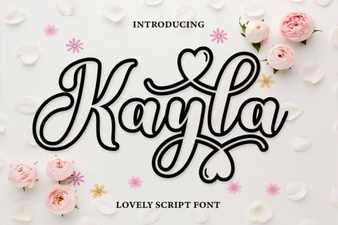 Design Your Vision with Kayla Outline Font
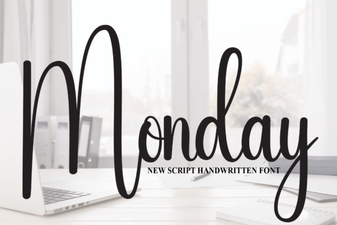 Monday Font Styles for Your Web Design Projects
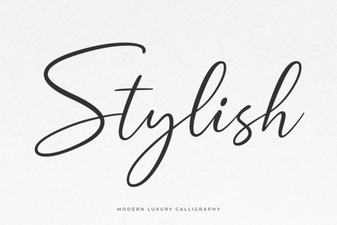 Elevate Your Designs with Stylish Typography
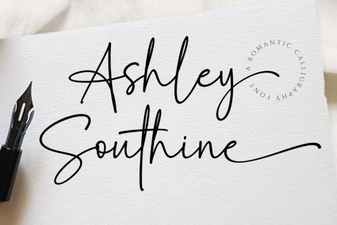 Ashley Southine Font: Elegant Designs & Creative Uses
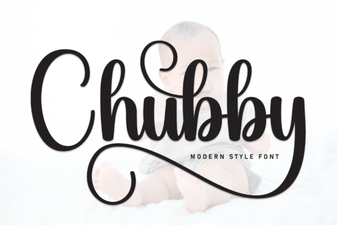 Design-Friendly Chubby Fonts for Web Projects
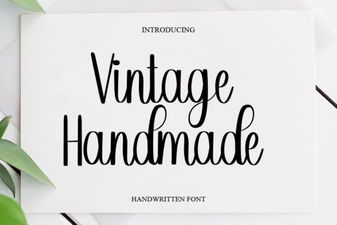 Crafting Elegant Designs with Vintage Handmade Fonts